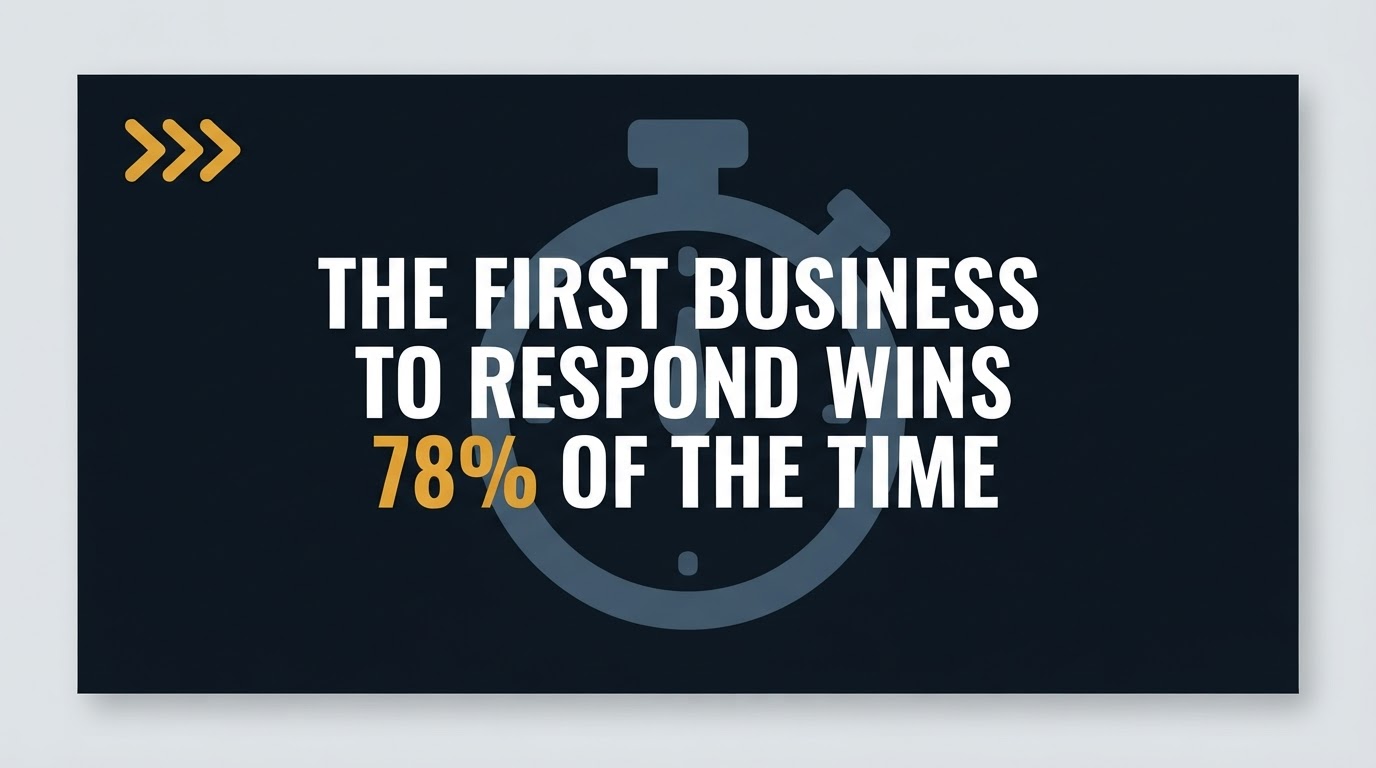
A homeowner fills out a quote form on your website at 2pm on a Tuesday. They also filled out quote forms on two competitor sites. All three businesses offer similar services at similar prices. Who gets the job?
Almost always, the one that responds first.
The data is brutal
Studies from MIT, Harvard, and the lead management industry have found the same thing for over a decade: the odds of qualifying a lead drop by a factor of 10 if you wait more than five minutes to respond. After 10 minutes, the lead is effectively cold. They've already moved on, started a conversation with whoever got there first, or decided to put the project off.
For home service businesses, the numbers are even starker because the purchase intent is immediate. Someone searching for "emergency plumber" needs a plumber now, not tomorrow.
Why manual follow-up fails
Most trades businesses handle lead follow-up the same way: the form submission goes to an inbox, and whoever has time checks the inbox. On a busy day, that might be hours. On a weekend, it might be Monday.
The problem isn't laziness. It's that you're on a roof, under a sink, or on another call. You can't check your phone every two minutes. But your competitors who have automated the first response can.
What a good first response looks like
The first response doesn't need to be a quote. It needs to acknowledge the request, set expectations, and keep the conversation alive. Something like:
"Hi [name], thanks for reaching out. We got your request about [service]. I've got a couple of questions before we schedule a visit — is morning or afternoon better for you tomorrow?"
That message takes 10 seconds to send, but it does the critical work: it tells the customer they're being taken care of, and it asks a question that requires a response, which keeps the conversation going.
Automating without sounding like a robot
The fear with automated follow-up is that it sounds automated. And badly set up automation does sound like a robot, which can be worse than no response at all.
Done right, the first response is instant, personalized with the customer's name and the specific service they asked about, and conversational in tone. The customer doesn't know — and doesn't care — whether a human or a system sent it. They care that someone is paying attention.
The compounding effect
Being first doesn't just win the individual job. It builds a reputation. Customers talk to neighbors. "I called three plumbers and this one actually called me back the same day." That word of mouth is worth more than any ad spend.
If you're losing jobs and you can't figure out why, check your response time first. It's almost always the answer.
Want this working in your business?
We set up the site, the AI assistant, and the follow-up so every call gets caught and every lead gets a response. Book a demo and see it run on your business.
